
3 Perspectives for Safe Design Verification on the Shop Floor
Organizes fail-safe, fool-proof, and non-routine work concepts, providing examples of points to verify on-site.
Fail-safe: Ensuring Safety During Failures
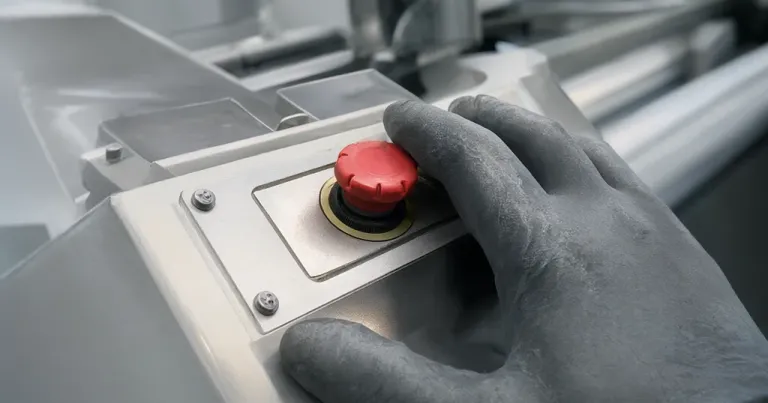
Fail-safe is a concept that incorporates functions to prevent dangerous states even if equipment components break or functionality degrades. For example, measures that trigger an emergency stop when a safety device's function is compromised. It is crucial to have a mechanism that, even if the control mechanism fails, locks the equipment into a predefined safe state, limiting the impact of the failure to ensure worker safety.
Fool-proof: Safety Based on the Premise of Human Error
Fool-proof is an approach that assumes people make mistakes due to carelessness or misunderstanding. In addition to hazard prediction training, measures include enlarging machine operation displays, differentiating control colors and shapes, and aligning the direction of machine movement with the operator's action. If actions contrary to expectations cannot be ruled out even with these measures, one must assume they could immediately lead to accidents and take preventive measures in advance.
Risks and Verification Points for Non-Routine Work
Non-routine work, such as maintenance and troubleshooting, differs from normal operations. Because these tasks are not repeated daily, workers have fewer opportunities to become proficient, which is one reason for the high incidence of accidents. Additionally, they often span multiple departments, making work instructions prone to ambiguity. For example, in tasks involving production and maintenance departments, verify that work has not started without sufficient prior coordination and communication, and that each person in charge clearly understands their role and hazard points.
Sources
- 厚生労働省 職場のあんぜんサイト anzeninfo.mhlw.go.jp
- 厚生労働省 職場のあんぜんサイト anzeninfo.mhlw.go.jp
- 厚生労働省 職場のあんぜんサイト anzeninfo.mhlw.go.jp
This content reflects the publication date. Laws and rules change — always check the official source.